



How MCP Is About to Replace Traditional APIs
Developers everywhere are noticing something unusual: AI tools are becoming more powerful without relying on bigger APIs. The shift is driven by MCP, the Model Context Protocol, which gives AI systems a native way to interact with tools, files, databases, and codebases. This is not a small upgrade to the old API model. It is a completely different way for AI to operate inside applications, and it is already changing how modern software is built.
Why MCP Is Such a Big Deal
Traditional APIs were built for humans and frontends. They require documentation, SDKs, authentication layers, version control, and hours of integration work. MCP changes this completely. It gives AI models a unified way to understand what tools exist, what they can do, and how to use them. No wrappers. No custom clients. No complex onboarding.
The model discovers your tools automatically and interacts with them like built-in capabilities. This turns LLMs into active operators rather than passive responders. They can read files, inspect codebases, call functions, run commands, interact with databases, and automate workflows with almost no developer overhead.
Also Read:How AI Agents Turn Prompts into Full Workflows
How MCP Works in Real Projects
An MCP server lives inside your application. You define tools and expose their capabilities in a structured, model-friendly format. The LLM connects as a client and immediately understands how everything is organized. It sees the available tools, the required parameters, the input structure, and the expected output format.
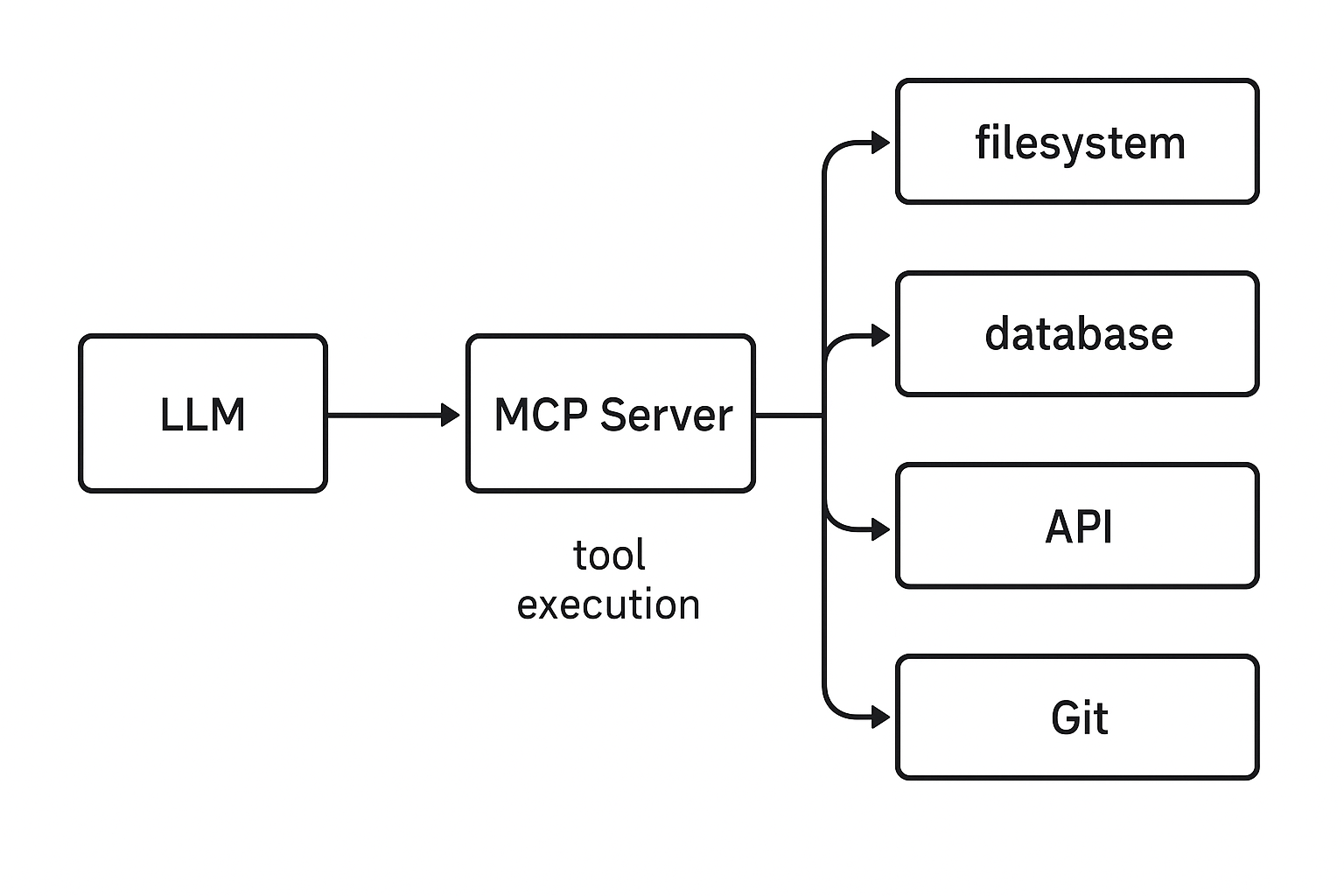
Once connected, the model decides when to call a tool. You are no longer writing glue code or telling the LLM exactly how to integrate with your system. The workflow becomes intelligent and dynamic. This makes interactions feel natural and efficient, especially in development environments like Cursor or Claude Desktop.
Also Read Our Other Article:
AI Automation and DevOps: How n8n, Flowise, and LangGraph Are Redefining Workflow
From Prompting to Context Engineering: How AI Workflows Are Evolving
Google Antigravity Is Reimagining the Future of AI Driven Software Development
RAG 2.0 Explained: The Retrieval Shift That Makes AI Finally Accurate
Where MCP Is Already Replacing APIs
The adoption is happening faster than most people realise.
Cursor uses MCP to let Claude explore entire codebases.
Claude Desktop uses it to browse local files.
v0.dev uses it to generate full-stack applications with local tools.
Early stage SaaS teams are replacing internal API clients with small MCP tool layers so their AI agents can handle operations without any custom middleware.
Enterprises are also paying close attention. MCP allows internal LLMs to interact with systems like CRMs, ERPs, and reporting tools without exposing public endpoints. Everything stays local and secure, which solves one of the biggest challenges in enterprise AI adoption.
Does This Mean APIs Are Going Away
Not completely. REST and GraphQL are still essential for frontend applications and external integrations. But for AI-native systems, the center of gravity is shifting toward MCP. It gives the model a direct path to the tools it needs without going through layers of manual integration.
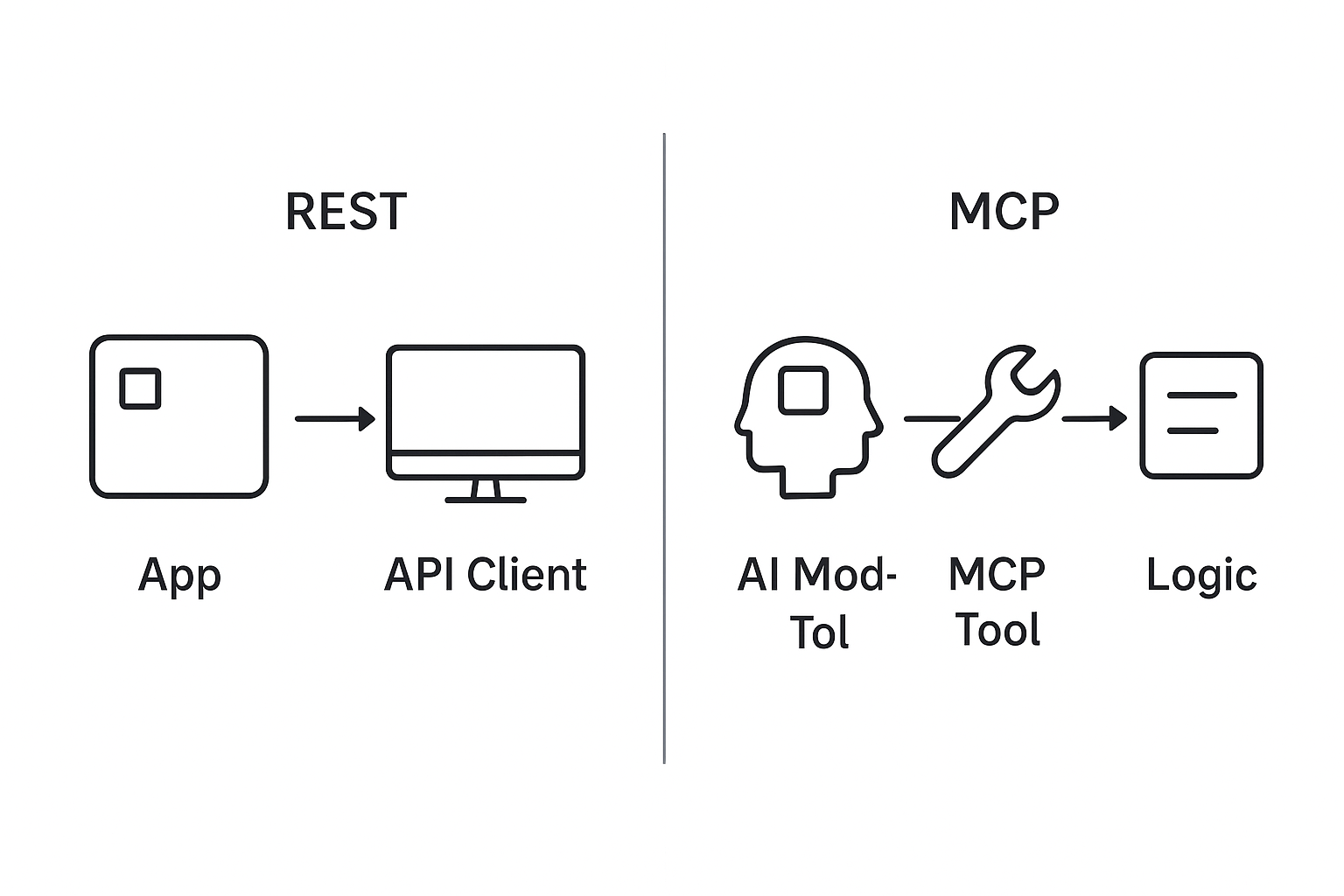
For the first time, AI can operate inside the software environment the way a developer would, not the way a client application would. That is the real breakthrough.
My Perspective
I see MCP as the natural next step in AI engineering. It removes friction, simplifies orchestration, and gives LLMs the ability to work with tools in a much more natural way. MCP is not trying to improve APIs. It is redefining the interface layer with AI in mind.
As more tools, frameworks, and platforms adopt MCP, we will see an entirely new development workflow emerge, where AI is not just assisting but actively building, inspecting, fixing, and deploying software.
The future of integration is not endpoints. It is context. MCP is the first protocol built for that world, and I am excited to keep exploring what it makes possible.
Frequently Ask Questions
What is MCP in AI Development
MCP is a protocol that allows AI models to use tools, functions, files, and systems through a standard interface without traditional API clients.
Why is MCP considered the future interface layer
Because LLMs can discover and use tools automatically, which removes integration overhead.
Does MCP replace REST APIs
No. REST remains useful for frontends, while MCP becomes ideal for AI agents and automation workflows.
Is MCP secure
Yes. MCP can run locally, behind firewalls, and with strict permission scopes.
Which platforms already support MCP
Cursor, Claude Desktop, v0.dev, and several early AI orchestration frameworks.
Can I wrap existing APIs with MCP
Yes. Any API or function can be wrapped as an MCP tool with minimal code.
Why is MCP useful for enterprise AI
It avoids exposing internal systems to the public internet and keeps operations local.
Can MCP run offline
Yes. MCP works perfectly in local and offline development environments.